Renewal on the Front Foot: Turning Telematics Evidence into Van Insurance Leverage

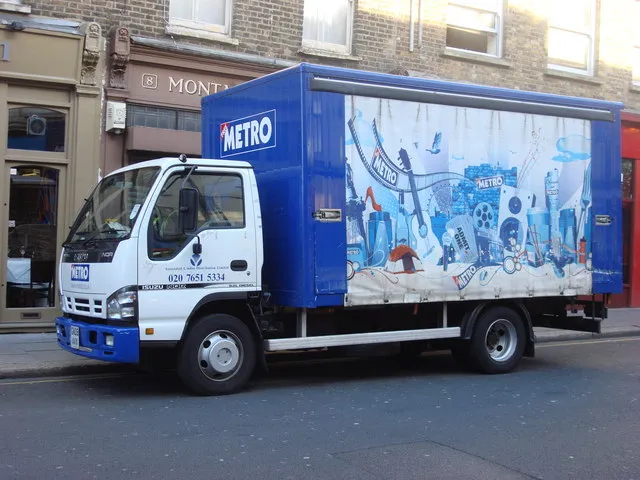
Photo: U.S. Navy photo by James Kimber, Public domain, via Wikimedia Commons
Van insurance remains one of the least predictable lines on the fleet budget. Repair costs, tool theft claims and the rising cost of credit hire have all fed into commercial motor pricing, and many SME operators have absorbed consecutive increases without ever testing whether the number quoted reflects the risk they actually run. Meanwhile, the telematics unit fitted behind the windscreen has been quietly logging the evidence that could change the conversation.
A renewal audit is not a procurement exercise in new hardware. For most fleets of five to fifty vans, it is an exercise in extracting, cleaning and presenting data the business already owns.
Start With What You Already Hold
Before approaching a broker, establish what is available. Standard telematics subscriptions typically generate journey logs, GPS traces, speeding events, idling time, harsh acceleration and braking counts, and a per-driver scorecard. Many operators renew these subscriptions annually without ever exporting a report. The first task is to confirm the export format, the retention period on the supplier platform, and whether historic data can be pulled as a CSV or PDF bundle.
Where a fleet has no telematics, the audit becomes a case for fitting it — but the commercial argument should be made on claims defensibility and driver coaching first, and premium relief second. Discounts are discretionary and vary considerably between underwriters.
The Data Set Worth Assembling
A credible submission rests on consistency rather than volume. A rolling twelve-month window, compared against the preceding twelve months, gives an underwriter both a snapshot and a trend.
- Telematics-verified annual mileage per vehicle, set against the figure declared at the last renewal
- Speeding events per 1,000 miles, split by driver and by road type where the platform supports it
- Harsh braking, acceleration and cornering rates, with the 90th percentile shown alongside the fleet average
- Idling hours and the associated fuel estimate
- Proportion of mileage undertaken outside daylight hours
- Driver scorecard ranking, plus quarter-on-quarter movement
- Licence check dates, endorsement status and any driver declarations on file
- Incident log including near misses and unreported damage, not only claims
- Repair and downtime cost per vehicle, drawn from workshop invoices
- Security specification: trackers, deadlocks, hook locks, tool vaults, depot parking arrangements
- ADAS and safety specification per van — autonomous emergency braking, blind-spot monitoring, reversing cameras
Presenting Events as Management, Not Perfection
Underwriters are not looking for a fleet with no incidents. They are looking for evidence that incidents are detected and acted upon. A submission that shows two drivers responsible for a disproportionate share of harsh braking events, followed by documented coaching, a revised route allocation and a measurable fall in those events over the following quarter, is considerably more persuasive than a clean-looking average that cannot be interrogated.
Use distributions rather than fleet-wide means. Averages conceal the tail, and it is the tail that generates claims.
Building the Broker Pack
Aim for a single cover sheet followed by no more than three charts and a short appendix. The cover sheet should name the fleet, the vehicle types and gross weights covered, the mileage basis, the initiatives introduced during the period with their start dates, and the person accountable for fleet risk. The appendix carries the raw exports so an underwriter can verify the summary.
Ask the broker early which format the target market accepts. Some underwriters will price from a scheme provider's dashboard, others want anonymised spreadsheets, and a few will only credit data from an approved device list. Finding this out six weeks before renewal avoids a scramble.
Where Insurers Still Push Back
Telematics is influential but not decisive, and fleet managers should be realistic about the limits.
Small samples carry little weight. Data from four vans over eight months rarely moves a rate, however good the scorecards look. Self-installed or unverified hardware is treated with caution. Data ownership clauses matter — if the underwriter cannot see the feed directly, the fleet's own summary may be accepted but discounted.
Claims history remains the dominant rating factor. A poor loss record will not be argued away by strong driver behaviour scores, though a credible management narrative can support a better terms discussion at the margin. Note also that tool theft claims, driver age restrictions common on van policies, overnight parking postcodes and mileage bands all exert pressure that telematics cannot offset.
Finally, there is a distinction between having telematics and acting on telematics. Brokers report that submissions listing a device but no follow-up process are frequently set aside.
A Practical Audit Checklist
- Confirm data export rights and retention with the telematics supplier.
- Pull twelve months of journey, event and scorecard data into a single working file.
- Reconcile telematics mileage against declared mileage and explain any variance.
- Identify the highest-risk decile of drivers and document interventions taken.
- Assemble the incident log, including near misses and third-party damage.
- Collate workshop invoices for repair and downtime cost per vehicle.
- Verify licence checks are current for every driver, including occasional users.
- Review security measures and evidence them photographically where useful.
- Draft the one-page summary and have it challenged internally before it reaches a broker.
- Diarise the exercise quarterly so the renewal submission is a by-product rather than a project.
Start the process roughly ninety days before renewal. A fleet that arrives at the broker with a verified twelve-month picture, a documented coaching regime and a realistic view of what its own data can and cannot prove is in a materially better position than one opening with the previous year's premium and a request for a reduction.