The Plug Behind the Gate: Why Depot Charging Decides SME Van Electrification
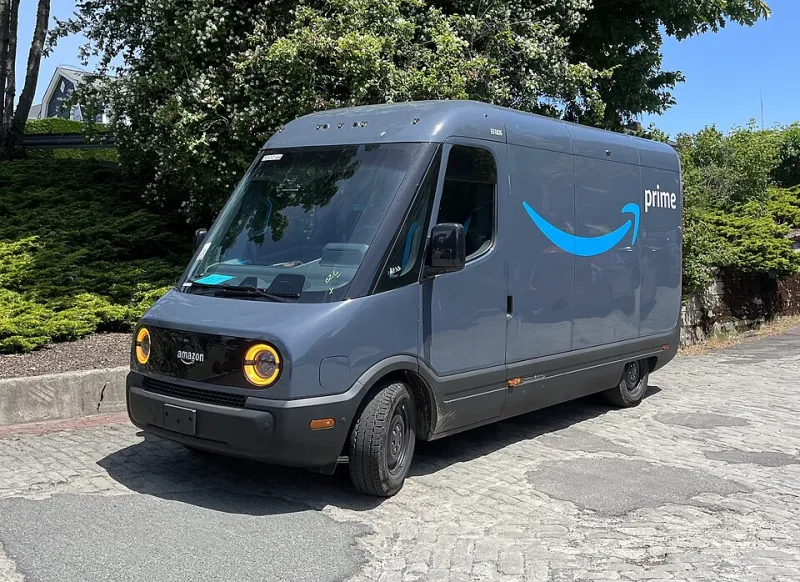
Photo: Jay8g, CC BY-SA 4.0, via Wikimedia Commons
The electric van debate in the UK is often framed around public infrastructure. Ministers, industry bodies and motoring organisations count chargepoints, announce rapid hubs and debate kerbside provision. Those figures matter for long journeys and unexpected top-ups, but they are a poor guide to whether a typical SME can electrify its van fleet. For most small and medium-sized operators, the decisive question is simpler: can the vehicle be charged where it is parked overnight, at a cost and reliability that the business can plan around?
The argument here is not that public charging is irrelevant. It is that depot charging is the infrastructure decision that makes or breaks van electrification for SMEs. A business that can charge behind its own gate has a fundamentally different cost base, operating routine and risk profile from one that depends on the public network. In 2026, that distinction is more important than the raw count of chargepoints.
The public chargepoint count is a poor proxy for SME readiness
Public rapid charging is expensive relative to overnight depot charging, and it consumes driver time. A van on a multi-drop route cannot afford to wait in a queue or detour to a retail park at the busiest point of the day. Public charging also exposes the business to tariff changes, vandalism, occupancy and payment complexity. These issues are manageable as a backup, but they are a weak foundation for a fleet that returns to the same base every evening.
For many SME vans, the daily duty cycle is predictable. The vehicle leaves a yard or yard-like location, completes a route and returns. That pattern is well suited to overnight charging at low power. The public network then becomes an exception-handling tool rather than the primary energy source. Operators who understand this early avoid the mistake of buying electric vans before securing a workable charging arrangement at base.
Grid connection is the real bottleneck
Depot charging is not simply a matter of buying a charger and mounting it on a wall. The electricity supply must be able to support the load. For small depots with limited existing capacity, the distribution network operator may require an upgrade, and the timeline for connection and upgrade work can be measured in months rather than weeks. The precise lead time varies by region and by the scale of the request, but the planning assumption should be conservative.
The practical lesson is that the connection application should precede the vehicle order, not follow it. An operator who orders vans first may find them sitting idle while the electricity supply is resolved. Early engagement with the distribution network operator also allows the business to discuss load management, phased charging and whether a smaller connection can meet the initial requirement. Smart charging and staggered schedules can reduce the peak load, but they cannot remove the need for a competent electrical design.
Upfront costs extend beyond the charger
The visible cost is the chargepoint itself. The less visible costs include civil works, cabling, protection equipment, earthing, signage, software, back-office integration and, in some cases, a supply upgrade. For a small fleet, these items can dwarf the unit price of the charger. A realistic budget should include installation, commissioning and an allowance for future maintenance.
Grant support can change the arithmetic, but scheme rules and availability move over time. Operators should check the current position rather than relying on figures from an earlier funding round. It is also worth separating capital cost from whole-life cost. A depot charger that is correctly sized and well installed may cost more upfront than a cheap unit, but it can reduce downtime, avoid expensive public charging and provide a more stable energy cost per mile.
Duty cycles decide the size of the system
A common error is to specify charging infrastructure around a headline vehicle range figure rather than the actual work the van does. A fleet that averages 60 to 90 miles a day on local routes has different requirements from a fleet that covers 150 miles or more with payload and heating loads. Overnight alternating current charging is often sufficient for the former; the latter may need more careful route planning or access to en-route charging.
Double-shifting is another consideration. A van that returns to base and goes out again the same day may need faster charging or a larger battery. The depot design should reflect the number of vehicles returning at the same time, the available parking layout and the electricity supply. In practice, a phased approach is often sensible: start with the vehicles and routes that fit overnight charging most comfortably, then expand as the supply and operational experience allow.
Workarounds for operators without off-street parking
Not every SME has a yard. Some businesses operate from rented units with shared parking, residential streets or customer sites. This is a genuine constraint, but it is not always a fatal one. Shared depot arrangements, business park charging, local authority commercial charging hubs and charging-as-a-service models can provide an alternative to private infrastructure. The suitability of each depends on location, route density and the willingness of site owners to collaborate.
Operators without off-street parking should also examine whether a different base can be used for charging, even if the administrative address remains elsewhere. A satellite yard, a partner site or a staff car park with spare capacity may solve the immediate problem. Where no such option exists, the business should be honest about the risk: relying entirely on public charging for a commercial van fleet introduces cost and time uncertainty that may outweigh the environmental and reputational benefits.
A pragmatic decision framework
The first step is an honest duty-cycle audit. Record daily mileage, payload, route type, return times and the number of vehicles that would charge simultaneously. The second step is a parking and supply review: where do the vans actually spend the night, and what electrical capacity is available? The third step is early engagement with the distribution network operator and a qualified electrical contractor. The fourth is a whole-life cost model that compares depot charging, public charging and a mixed model.
A pilot is often more informative than a spreadsheet. Running one or two electric vans on real routes for several months reveals driver behaviour, charging reliability and the gap between theoretical and actual efficiency. It also tests the depot routine before the business commits to a larger supply upgrade. For SMEs, that staged approach is usually more prudent than a wholesale switch based on public chargepoint maps.
The decision behind the gate
Public charging will continue to improve, and it will remain essential for exceptions and longer journeys. But for the typical UK SME van fleet, the central electrification decision is whether the depot can support reliable, cost-effective overnight charging. Grid connection timelines, upfront infrastructure costs and duty-cycle fit are less visible than chargepoint counts, but they are the factors that determine whether electric vans actually work for the business.
In 2026, the most useful question for an SME is not how many public chargers exist within a certain radius. It is whether the plug behind the gate can be installed, afforded and relied upon. Operators who answer that question early will be better placed to electrify on their own terms, rather than on the terms of a public network that was never designed around their daily routine.