The Acceptance File: Documenting a New Van Before It Enters Service
Delivery day is often treated as an administrative formality: keys are exchanged, a folder of paperwork is passed across and the van is sent straight out on its first run. For a small fleet, that approach can be costly. The dealer's pre-delivery inspection is a useful quality gate, but it is not the same as an operator's acceptance inspection. The difference lies in evidence. A disciplined handover file records what was ordered, what arrived, what was agreed and when the warranty clock started. It also gives the fleet a baseline against which future damage, wear and resale value can be judged.
Why a second inspection is worth the time
A dealer PDI is generally carried out before the vehicle reaches the customer. It should catch obvious faults, but it does not remove the need for an independent walk-round by the business that will own or lease the van. Transport damage, missing accessories, specification errors and incomplete paperwork can all survive the process. Once the delivery note is signed without qualification, the commercial burden shifts quickly. A photograph taken at the right moment is far more persuasive than a recollection weeks later.
The acceptance file should therefore be treated as a dispute-prevention tool rather than a bureaucratic extra. It protects the fleet against paying for someone else's mistake, supports a clean warranty claim and helps preserve resale value when the van eventually leaves the fleet.
Prepare the file before the vehicle arrives
Good acceptance starts with the order. Before delivery, assemble the documents that describe what the van should be: the order form or lease schedule, the agreed specification, the accessory list, the finance agreement where applicable and any written assurances about build dates or lead times. Record the expected registration, VIN and mileage if these are known. If the van is replacing an older vehicle, note the planned disposal or return date so that handover does not become a rushed swap.
The person conducting the inspection should have authority to reject or qualify acceptance. A driver can carry out the physical checks, but someone in the business must own the decision to sign.
Bodywork and mileage: establish the baseline
Inspect the van in daylight, ideally under cover but with enough light to reveal panel distortion and paint defects. Walk the vehicle systematically: front bumper, bonnet, wings, doors, sills, rear quarters, roof, wheels and glazing. Check the load area floor, inner panels and bulkhead. Look for transport damage, paint blend marks, mismatched panels and kerbed alloys. Inside, confirm the mileage, fuel or charge level, warning lights and the presence of the expected keys and locking wheel nut.
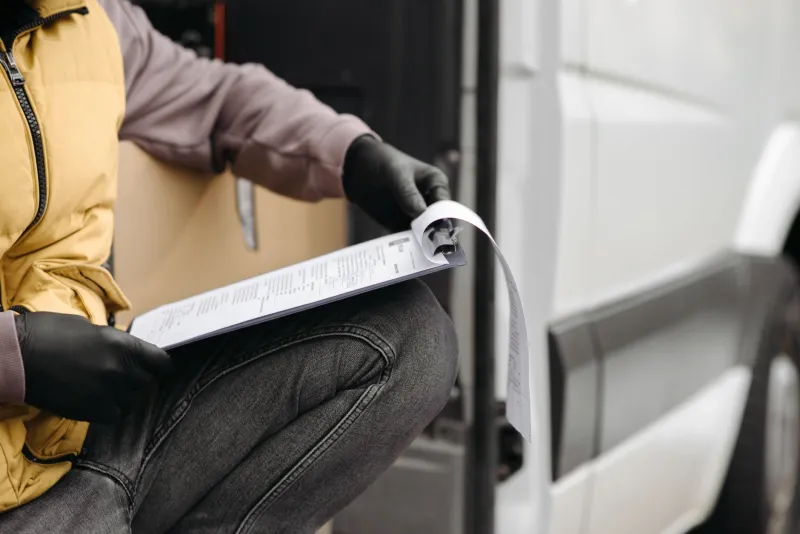
Photograph the whole vehicle and any defects, with a timestamp where possible. If something is wrong, note it on the delivery paperwork before signing and ask for a written rectification date. Do not rely on a verbal promise. A short video walk-round can be useful, but still photographs of specific issues are easier to file and share.
Accessory fit against the order
For many SME fleets the base van is only part of the purchase. Racking, ply lining, bulkheads, towbars, beacon wiring, livery and telematics are often fitted before delivery. Check each item against the order, not against what looks plausible on the day. Confirm that racking is secure, that payload assumptions still hold after fit-out and that electrical work has not compromised the manufacturer's wiring or warranty position. Livery should be inspected for alignment, finish and any instruction about removal at defleet.
Accessories are a common source of ambiguity because they may be supplied by a converter rather than the dealer. The acceptance file should identify who fitted what and which warranty applies.
Warranty, service intervals and start dates
Warranty administration is easy to overlook when the vehicle is new. Confirm the warranty registration, the stated start date and the recorded mileage. Check whether the warranty begins at registration, delivery or first use, and make sure the fleet's records agree. Review service intervals and any conditions attached to them, including oil quality, inspection requirements and extended warranty terms. Confirm that the digital service record has been opened and that the PDI stamp or equivalent entry is present.
Where paint or anti-corrosion warranties apply, record the inspection requirements. A missed bodywork inspection can undermine a claim years later, so the handover file should trigger a diary entry rather than simply store a booklet.
Connected services and data ownership
Modern vans arrive with manufacturer apps, telematics, emergency call systems and, in the case of electric models, charging accounts. Confirm which services are active, who administers them and how the account will be transferred to the fleet. The business should hold administrator rights, not the dealer or a departing member of staff. Check data consent settings and record which systems are transmitting vehicle data. If an aftermarket telematics unit is fitted, confirm that it is compatible with the manufacturer's systems and that the installation has not affected the warranty.
Driver familiarisation and first-week checks
Acceptance is not complete until the driver understands the vehicle. Handover should cover controls, payload limits, charging or refuelling, security features, defect reporting and the procedure for booking service work. For electric vans, include charging cable storage, public charging access and range expectations. For conventionally fuelled vans, cover AdBlue where fitted and the correct fuel grade. A short first-week check can catch loose accessories, warning lights or driver concerns before they become downtime.
A checklist SME fleets can adapt
- Order form, specification and accessory list matched to the vehicle.
- VIN, registration and mileage recorded.
- Timestamped photographs of all panels, wheels, glazing and load area.
- Defects noted on the delivery paperwork before signature.
- Racking, bulkhead, towbar and electrical accessories checked and attributed.
- Warranty start date, mileage and service intervals confirmed.
- Digital service record and PDI entry verified.
- Manufacturer app, telematics and charging accounts placed under fleet control.
- Keys, locking wheel nut and security devices accounted for.
- Driver familiarisation completed and recorded.
- First-week recheck diarised.
The acceptance file does not need to be elaborate. A folder, a checklist and a consistent photographic routine will do. What matters is that the fleet can show what it received, when it received it and what it did about any shortfall. That record protects the business at the point of dispute and supports a better resale or defleet outcome later. For an SME van fleet, the first hour of ownership is worth as much attention as the first service.